User Interface Design
Crafting intuitive digital experiences through thoughtful design
I see interface design as the bridge between what a product can do and what a person actually understands they can do with it. My approach to UI work is grounded in the wireframing and prototyping skills I developed at Cornell — using tools like Balsamiq, Figma, and Adobe XD to explore layout, hierarchy, and interaction before committing to code. The goal is always clarity: making the right action feel obvious.
Interface exploration at Quadio
Quadio was building a music platform for college artists, including bands and a cappella groups whose membership changes every semester. An existing group-profile wireframe treated membership as a single current list, which made it difficult to preserve alumni connections without confusing the active lineup.
I proposed interface variants for switching between current and past members while staying within Quadio's existing Adobe XD design language. The exercise was deliberately focused: compare visibility, consistency, content space, and the meaning each control communicated before recommending a direction.
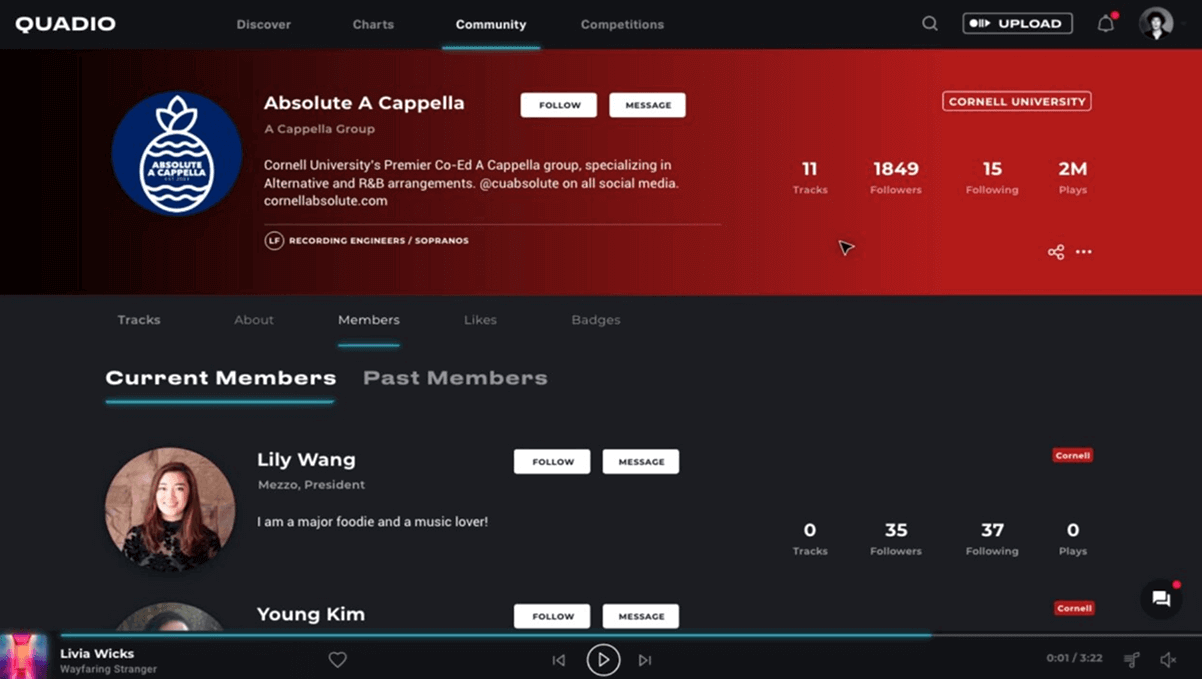
Prominent segmented control
This direction replaced the passive “Member List” label with a large control for choosing current or past members. It offered the clearest state and matched prominent controls elsewhere in the product, but used valuable vertical space before the member content.

Compact secondary control
This direction kept the member-list heading and placed a smaller switch beside it. It preserved more room for profiles and felt visually quieter, but required clearer labels so people would understand both the current state and the result of changing it.
Design Takeaways
This exercise reinforced that interface decisions are rarely isolated visual choices. The large toggle offered stronger visibility and consistency with Quadio's existing controls, while the smaller option preserved more room for member content. Comparing both approaches helped me evaluate hierarchy, consistency, clarity, and efficient use of limited screen space together rather than treating any one concern as the answer.
The project also showed how inclusive product thinking can uncover interface requirements. Supporting past and present members was not simply an organizational feature; it allowed graduating musicians to retain a meaningful connection to the groups and recordings they helped create.
Read the full Quadio internship case study for more context about the artist-relations, interface, and campus-marketing work surrounding this project.